


25 Feb #RSUDC21 Day Twelve: Procurement, costing and placemaking
Written by: Jessica Buckle and Tabitha Binding
In an evening focused on ‘procurement, costing and placemaking’, #RSUDC21 speakers explained how the revolution in construction methods wasn’t happening onsite alone, but throughout the design and planning process.
Behind low-carbon construction, modern method of construction (MMC), and innovative materials, such as cross-laminated timber, quantity surveyors (cost consultants) are challenging the preconceptions of what UK construction is, and helping bring the ideas of architects and engineers into the physical world.
Associate Director at Whitby Wood and TRADA Board Member, Kelly Harrison, kickstarted the evening by stressing the importance of collaboration when working within interdisciplinary teams, and how shared understanding, respect and language enhances the design process.
Oliver Booth, a partner at Gardiner and Theobald, began by discussing his work in procuring engineered timber buildings and helping push construction into new territory – beyond the labour-intensive ‘brick by brick’ model which has long dominated UK construction.
He said there is broad understanding and commons models for costing concrete, steel, and load-bearing brickwork, which makes these materials relatively easy to procure. However, mass timber systems, whether SIPS, Glulam or CLT, are relatively new and face greater difficulty.
To overcome an industry preference for traditional methods over manufacturing, an approach which is leading to high-carbon emissions and low productivity in comparison to other sectors of the economy, there is a need to tell the story of these new forms of construction and their benefits. This story telling approach extends to the cost manager.
Availability and affordability are the two largest drivers of procurement and tendering approaches, and when it comes to timber, there is market hesitancy around wide-scale adoption due to issues such as combustibility. Cost managers need to make a strong case for MMC and timber and show the wider benefits, including speed, job creation, sustainability, and sequestered carbon.
Partner at Cullinan Studio, Alex Abbey, continued the conversation by saying the construction industry remains extremely conservative in the UK and addressed that the way we continue to build has not evolved much within the last 100 years, despite the emergence of MMC.
However, with a growing body of evidence now highlighting the benefits of natural materials such as timber, in terms of sustainability, in health, and in wellbeing, there is change afoot. His own studio was committed to integrating nature into their design.
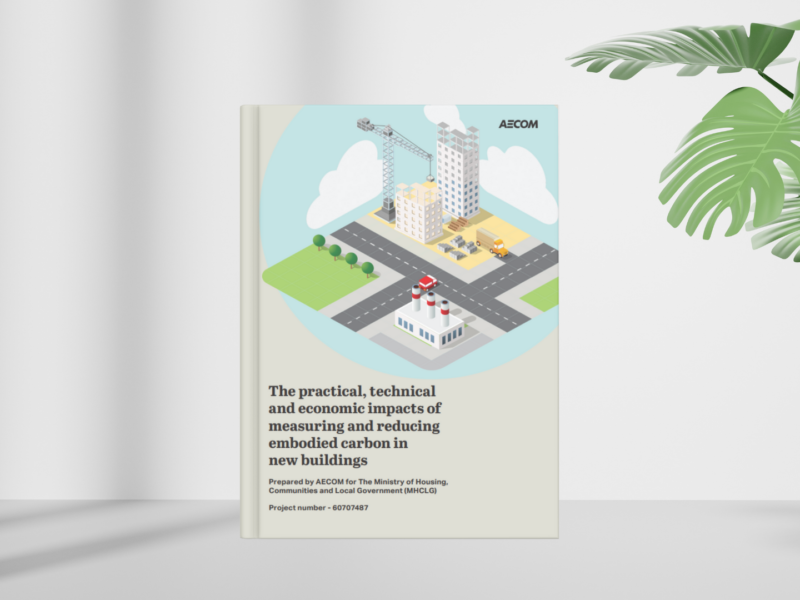
Now, with the LETI Embodied Carbon Primer and Climate Emergency Design Guide there are road maps to reduce embodied carbon in construction, and while these strategies are yet to seize hold in the industry, he expects this will change in future due to the climate emergency.
The use of timber, says Abbey, must grow as part of a wider turn to low-carbon construction, and despite concerns around fire, insurance and water among industry, in reality a well-built timber building could last centuries. By designing for disassembly, as discussed in the LETI guidance, there is an opportunity to give materials a second or third life beyond their first use in a building.
Director at Cast Consultancy, Rob Littlewood and Associate Director at Cast Consultancy, Danny Garwood, followed by providing an insight into the role of costing and procurement, and how it should be approached in the #RSUDC submissions.
Rob Littlewood began by bringing forward the rise of the ‘Cost Consultant or Manager’, as opposed to the ‘Quantity Surveyor’ – a term he saw as antiquated.
At its heart, the cost manager sits alongside the designer to control costs in ways which maximise value, minimise future liabilities, and maintain the required standard of quality and safety. The cost manager should be fully integrated into the planning and design process from day one.
While the creation of an MMC definition framework with seven categories by the Ministry of Housing, Communities & Local Government (MHCLG) in 2019 is helping broaden understanding of these methods, in many ways it will be pushed into the mainstream by an impending shortage of labour in the UK, highlighted in the Farmer Review in 2016.
A question from an audience member prompted discussion of whether the traditional ‘scope triangle’ of time, cost and quality could in future become a square with the inclusion of carbon emissions. Littlewood, Garwood and Booth all agreed this would likely be the case in the future, particularly as agreement was reached on how best to calculate embodied carbon costs.
The urgency of the climate emergency was driven home in the final presentation by Director at Building with Nature, Dr Gemma Jerome. Jerome discussed her work to benchmark placemaking and building in collaboration with nature and green infrastructure.
Building with Nature draws upon evidence and good practice guidance to define high quality green infrastructure during each stage of the development process, from planning to design, through to long-term management and maintenance.
This free set of guidance is the UK’s first benchmark for green infrastructure, raising the bar the built environment industry and mainstream green infrastructure to create holistic design principles of ‘placemaking’.
Placemaking is a multi-faceted approach to planning, design and management of public spaces which capitalises on local communities’ assets, inspiration and potential with the intention of creating public spaces of which promote health, happiness and wellbeing.
Good quality green infrastructure delivers a better development, and not just in terms of carbon emissions, but in the wider climate emergency, in ecology, green growth, and health, where a need has been highlighted by the Covid-19 pandemic. Green space is integral to all forms of wellbeing.
Core standards, wellbeing standards, water standards and wildlife standards, are all intertwined into multifunctional spaces within Building with Nature. The use of this benchmark is being endorsed on a national government, by major developers, and industry bodies. One clear benefit it offers is accelerating the planning process by setting expectations at an early stage.
MOBIE’s Mark Southgate spoke of how following these webinars, and adopting such benchmarks, by working in multidisciplinary teams, the younger generation of designers are sitting at the forefront of change, creating a new hope for the industry to achieve net zero.
TRADA and TTF’s Programme Manager Tabitha Binding concluded by refocusing the #RSUDC21 participants attention on the Sunderland Riverside Vaux site, the indicative 100 home masterplan, and the 3 bed 5/6 person home that would be designed in detail using all the tools, spreadsheets and information from the webinar series speakers – to achieve or exceed the RIBA 2030 Climate Challenge targets.
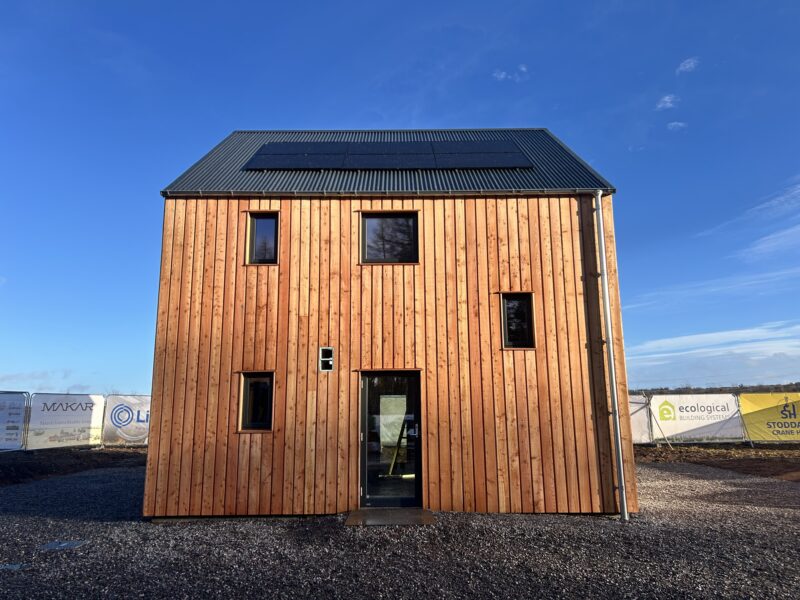
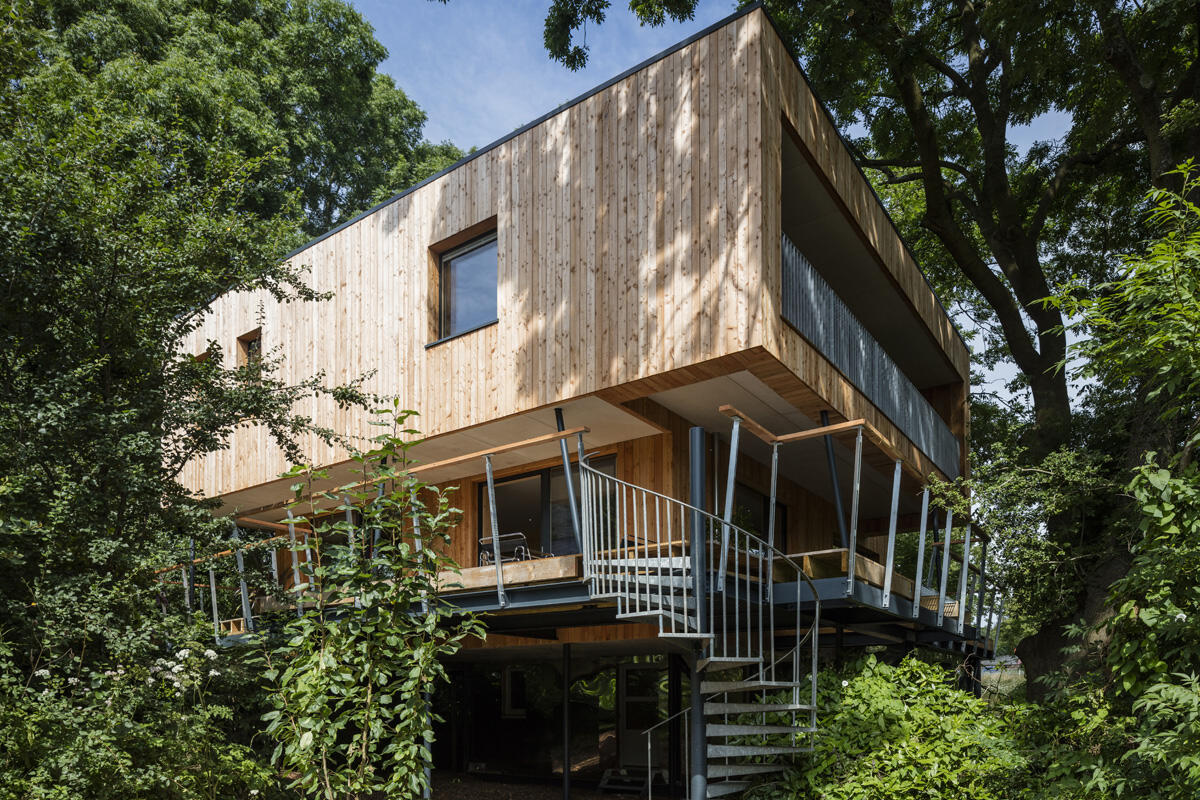
Photo credit: Dursley Tree House by Millar+Howard Workshop, Nicks Timber, via Timber Trade Federation.
With special thanks to our Gold Sponsor, Confederation of Timber Industries, our Silver Sponsors Rothoblaas, Accoya, PEFC UK and TDCA, our Bronze Sponsors ASBP, BSW and Wood for Good.
All submission and registration information is available on the TRADA, TTF and MOBIE websites, or within the brief which will be distributed to those registered. Registration remains open until 26 February 2021. There will be Q&A opportunities at the end of each webinar.
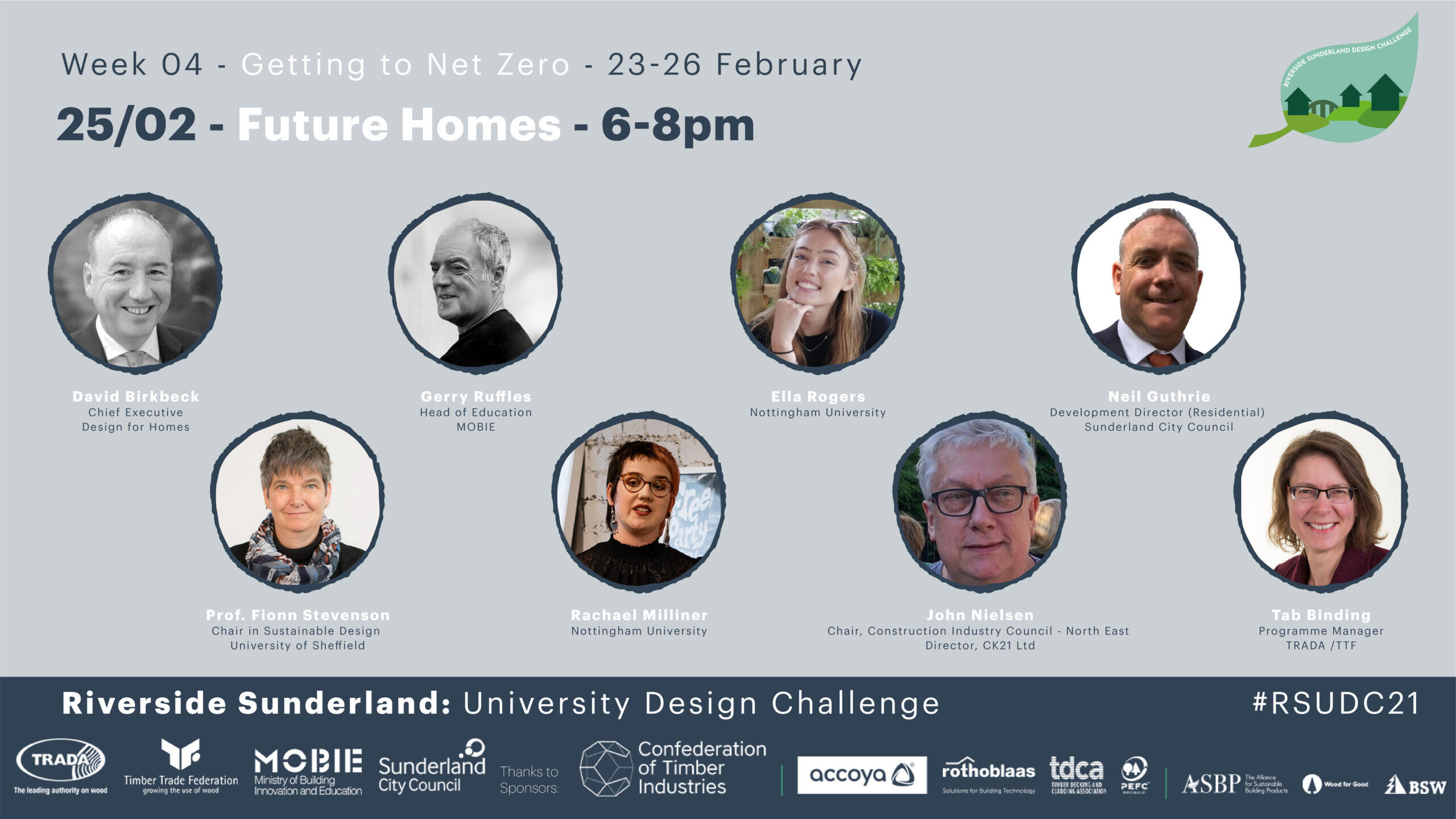
This evening week four of the #RSUDC21 webinar series concludes with the theme of ‘’Future Homes’. The presentations explore design for homes and communities, climate change and biodiversity, designing homes with people in mind and how to build a collaborative interdisciplinary team. Book by 4.30pm today via Eventbrite.
Students can register their interest for the competition and find further information on the partners and sponsors websites at TRADA, CTI, or MOBIE.