



19 Feb #RSUDC21 Day Ten: Timber Challenges
Written by: Jessica Buckle and Tabitha Binding
Timber is by far the best low-carbon, sustainable, renewable construction material that we can build with to achieve net zero emissions. To use wood wisely, you need to know how to specify and detail timber correctly.
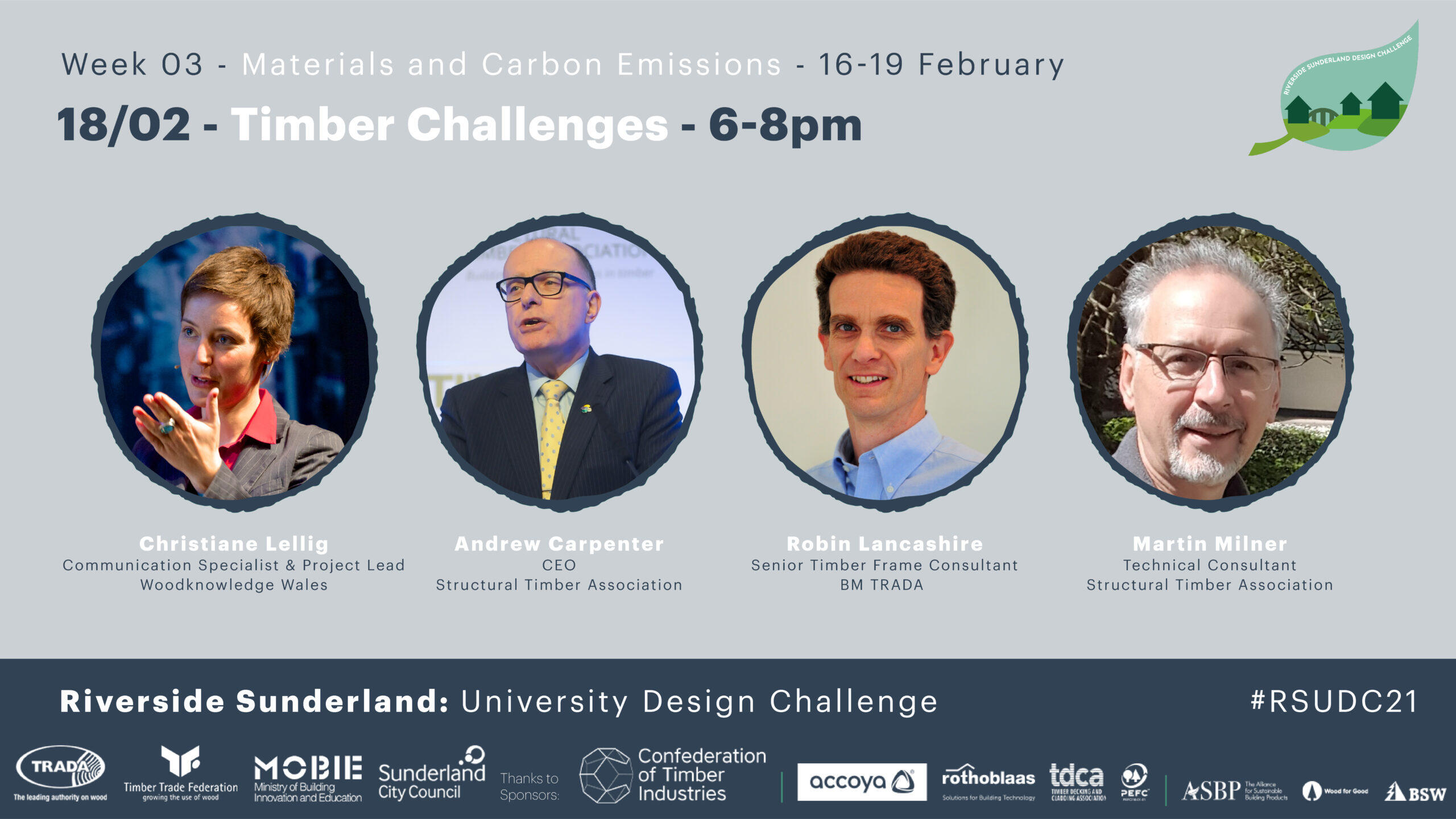
Tabitha Binding introduced the evening, setting out the competition’s ambition and the challenge to the participants, handing over to the session chair, Communication Specialist and Project Lead at Woodknowledge Wales, Christiane Lellig. Woodknowledge champions the development of wood-based industries for increased prosperity and well-being in Wales. Harnessing the collective spirit of businesses and organisations with an ambition to place trees, timber processing, wood products and housing at the heart of the green growth agenda in Wales. Increasing the wood market, supply and value of the homegrown resource, as well as improving and developing current practices of wood.
Structural Timber Association (STA) Chief Executive and series Alumni, Andrew Carpenter commenced the presentations, discussing the STA mission statement and vision for the built environment. Promoting and increasing the use of structural timber within the UK construction industry, raising the bar within sustainability, quality, health and safety, technical knowledge, innovation and training.
Senior Timber Frame Consultant at BM TRADA, Robin Lancashire, co-author of Timber Frame Construction, introduced the topic of moisture within timber construction and usage. BM TRADA is a global testing, inspection and certification company which delivers critical support services in material testing, product qualification testing, inspection and certification to ensure customer safety. Lancashire reiterates the importance of considering the design process, construction process and in-use final product as a whole.
When using timber as a material, we must consider Approved Document C: Site Preparation and Resistance to Contaminants and Moisture. According to functional requirements, the walls, floors and roof of the structure must adequately protect the building and inhabitants from ground moisture, precipitation, interstitial and surface condensation and spillage. These regulations drive innovation and creativity, adapting the design around the characteristics of the material. BM TRADA’s golden rule is that the timber must be 150mm above the exterior ground level. As well as level threshold, wall design elements such as deflection, drainage, drying and durability must be considered.
Condensation Risk Analysis is vital too when building with timber. These calculations are regularly required by building control to demonstrate compliance. Condensation moisture can cause severe damage to building components and moisture-sensitive materials. Long term damp conditions can result in mould, bacteria or pest damage.
One key issue of which designers and builders face during timber frame construction is differential movement. As the timber frame dries out, it will shrink and the overall height will reduce. The extent of the differential movement increases with the number of stories and will typically occur in conflict with the external facade, between the timber frame and other elements such as window and door openings.
Understanding how to divert moisture away from buildings in construction using methods such as building vertically, managing water, protecting sensitive materials and ensuring the building is efficiently made weathertight are positive starting points. Lancashire said that everyone is responsible to design with consideration and make educated material choices, both hugely impacting the final design outcome and longevity of the building.
Technical Consultant at the Structural Timber Association (STA), Martin Milner concludes the presentations by discussing fire safety as an essential design element. Following the Independent Review of Building Regulations and Fire Safety by Dame Judith Hackitt following the Grenfell Tower tragedy, there are big shifts in the regulatory landscape. This includes systematic change, a new framework and legislative change.
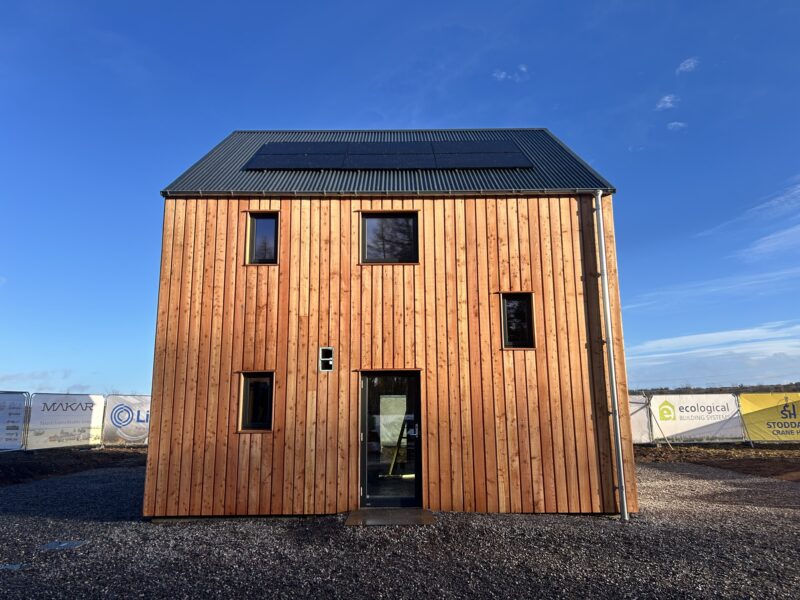
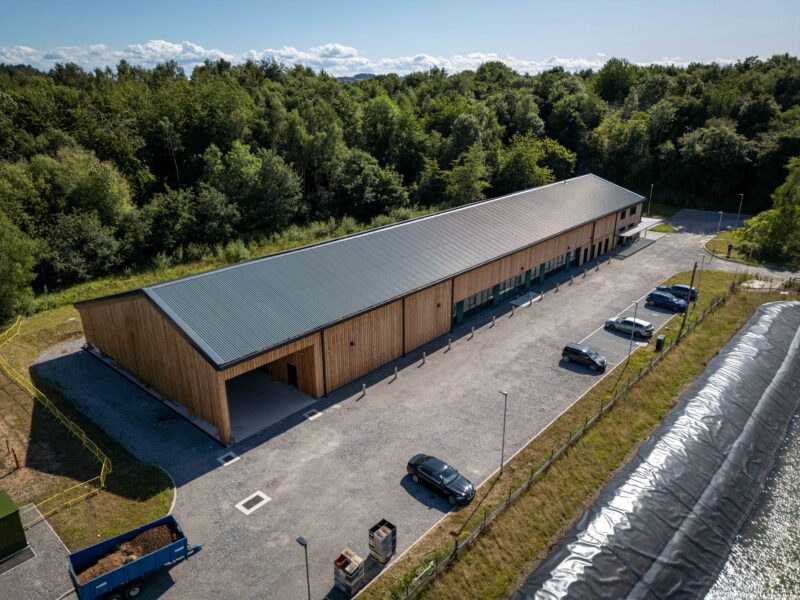
Photo credit: Binderholz, via Timber Trade Federation
With special thanks to our Gold Sponsor, Confederation of Timber Industries, our Silver Sponsors Rothoblaas, Accoya, PEFC UK and TDCA, our Bronze Sponsors ASBP, BSW and Wood for Good.
All submission and registration information is available on the TRADA, TTF and MOBIE websites, or within the brief which will be distributed to those registered. Registration remains open until 26 February 2021. There will be Q&A opportunities at the end of each webinar.
Our ‘Open House’ informal networking and discussion event is this evening which brings together like-minded leaders from the construction industry, educators, students and professionals, climate change pioneers. To join us book via Eventbrite.
Week 4 kicks off on Tuesday 23 February with ‘Structural Engineering’ for residential buildings and whether building without concrete foundations is possible. The programme is available here.
Students can register their interest for the competition and find further information on the partners and sponsors websites at TRADA, CTI, or MOBIE.