


24 Feb #RSUDC21 Day Eleven: Structural Engineering
Written by: Jessica Buckle and Tabitha Binding
The fourth and final week of the Riverside Sunderland: University Design Challenge (#RSUDC21) interactive webinar series continued last night with a focus on ‘Structural Engineering’, challenging the preconceptions of how we build and demonstrating how our choices affect carbon emissions.
Programme Manager at TRADA and TTF, Tabitha Binding introduced the weeks theme of ‘getting to net zero’, reiterating the competition’s ambition, as well as useful resources, before passing over to the session chair, Director at Structural and Civil Consultants Ltd, Robert Thorniley-Walker.
Thornilely-Walker spoke of the need to conserve the planet and retain existing buildings, including those historic, by adopting a ‘do not build’ mantra which avoids unnecessary construction, and makes use of existing structures in ways that minimise carbon emissions.
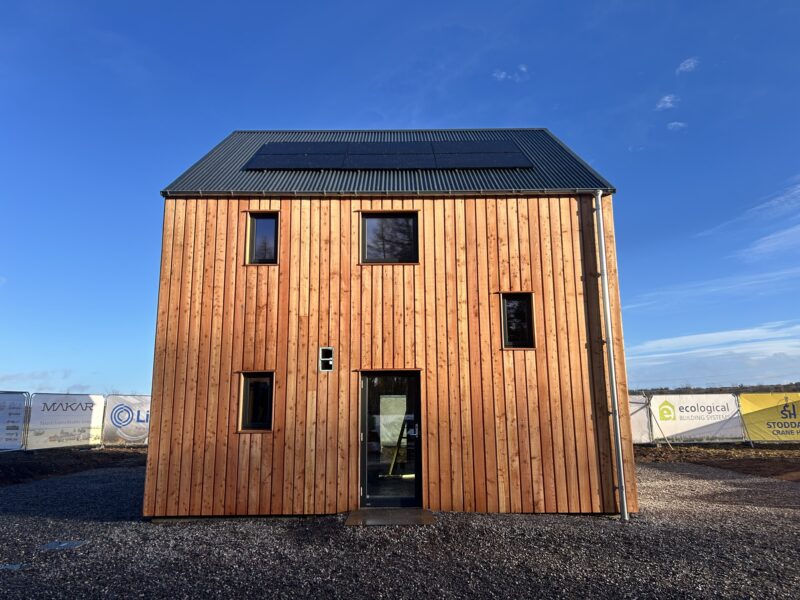
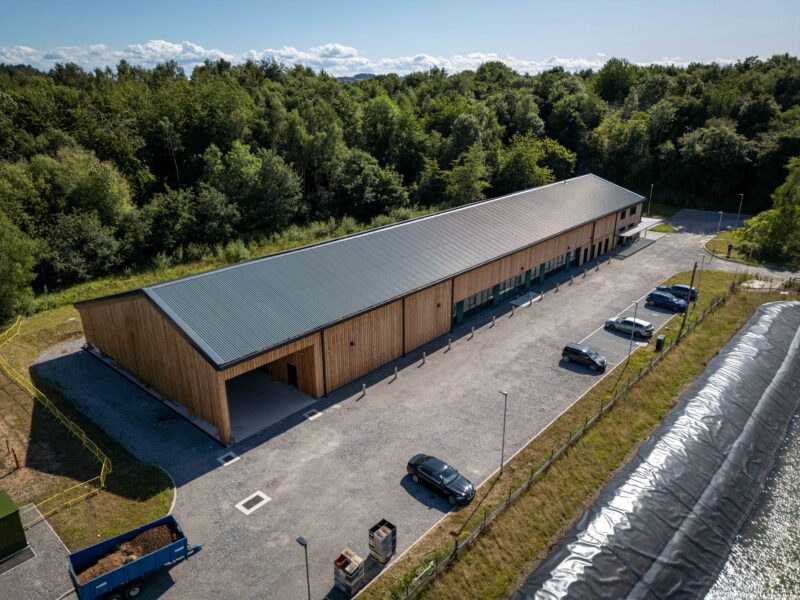
The baton was then passed to the Director at Smith and Wallwork Engineers, Simon Smith, to discuss structural engineering in terms of domestic timber buildings, including conceptual design, designing timber structures, structural elements and precedents.
He began by highlighting that when we build new in the UK we are using more materials per person than we were even a few years ago, and together with a growing population, this means our current approach will lead to embodied carbon emissions growing rather than shrinking.
Despite the performance of timber, when compared to countries such as Germany and Finland the UK has far lower consumption. This shows there is scope for the use of wood to grow in the UK, and for a shift away from the relatively high consumption of cement, a material responsible for 5% of global carbon emissions.
He also highlighted that despite preconceptions about the UK, our forestry industry is producing more material (11mt of timber) than either the local steel (10mt) or cement (9mt) industries.
After referencing local examples of timber construction, including Walter Segal, Goldsmith Street and Ellerslie Road, Smith urged participants to engage with timber to understand how strength, density, stiffness and moisture will affect a buildings performance, as well as carbon emissions.
Associate Professor of Sustainable Design at the University of Bristol, James Norman, author of ‘Structural Timber Elements’ (Commissioned by Smith while on the TRADA Board of Directors) and ‘Designing Timber Structures’ followed by echoing that the greatest opportunity for reducing carbon emissions is within the initial design and planning process, and highlighted 23 interconnected decisions which were faced at this stage.
He focused on eight of these 23 decisions to cover ‘ground conditions and foundations’, ‘materials’, ‘spans of floors and roofs’, ‘rapid sizing of walls and floors’, ‘grid spacing and structural layout’, ‘structural systems’, ‘insulation and envelope’, ‘prefabrication’ and ‘carbon emissions’.
Each of these design decisions should be considered together, he said, as they intertwine like a spider web in a non-sequential pattern. Each decision must be made with another in mind. An example he cited is that by placing a limit on carbon emissions, you will then limit the materials you can use, often to timber, which would mean using a shorter span in your design.
Norman said students should select the structural material which suits their design, brief and location best, and use it efficiently. By experimenting with different solutions within the 23-decision matrix Norman demonstrated how you can ensure you make the best possible decision.
Norman said modern engineers should consider tackling embodied carbon as an ethical challenge and always consider following the lowest carbon route, from ‘build nothing’, to ‘build less’, through to ‘build clever’ and ‘build efficiently’, all approaches which are essential to achieving net zero.
Associate at Build Collective, Structural Engineer and certified Passivhaus Designer, Beth Williams concluded the presentations by discussing whether concrete-free foundations are achievable. The short answer is yes.
While foundations are usually responsible for a large portion of the carbon emissions released in construction, there are a wide range of concrete-free methods which can alter what can often be considered a ‘sunk’ cost for carbon emissions when building by architects and engineers.
After taking into account the geotechnical conditions, the proximity of other buildings, and material limits, Williams showed you can use a wide range of alternative ‘shallow’ and ‘deep’ foundations, whether you wish to reuse recycled materials such as vehicle tyres or tubes from the oil industry, limecrete, or employ timber piles, a method commonly used in countries such as New Zealand.
Another overlooked method is reusing existing foundations from previous buildings on urban sites, which provides a zero-carbon option. While the load and historic footprint of the previous building must be determined and matched, the low weight of timber can make this a powerful option. More detail on this method can be found in the BRE Guide ‘Reuse Foundations for Urban Sites’.
The speakers came together at the end answering questions from participants, before challenging them to think outside the box in their own designs for their entries into RSUDC21.
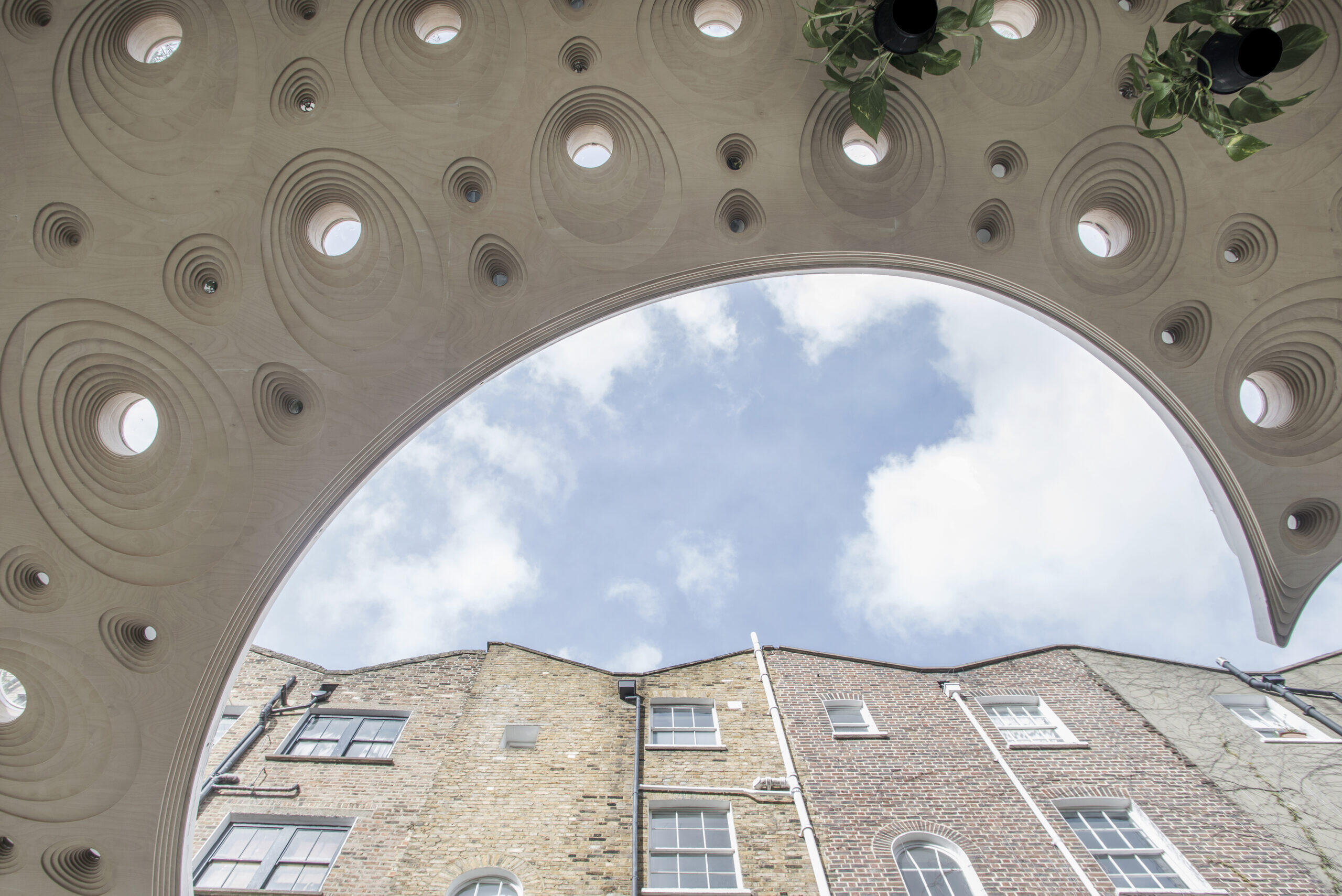
Photo credit: Sun Rain Rooms by Tonkin Liu Architects, James Latham, via Timber Trade Federation.
With special thanks to our Gold Sponsor, Confederation of Timber Industries, our Silver Sponsors Rothoblaas, Accoya, PEFC UK and TDCA, our Bronze Sponsors ASBP, BSW and Wood for Good.
All submission and registration information is available on the TRADA, TTF and MOBIE websites, or within the brief which will be distributed to those registered. Registration remains open until 26 February 2021. There will be Q&A opportunities at the end of each webinar.
This evening, week four of the #RSUDC21 webinar series continues with ‘Procurement, Costing, Placemaking’. Learn the complexities of procuring engineered timber, creating a cost-effective #RSUDC21 scheme and sustainable methods of placemaking. Book by 4.30pm today Wednesday 24 Februaryfor the webinar at 6pm – Procurement, Costing Placemaking. Book via Eventbrite.
Students can register their interest for the competition and find further information on the partners and sponsors websites at TRADA, CTI, or MOBIE.