



As the Right Hon Robert Jenrick said to the House of Commons, height is not enough in and of itself to judge the fire performance of a building. This is based on multiple factors, including design, occupancy, and secondary fire suppression measures such as sprinklers.
If the objective is to restrict the spread of fire across higher risk buildings, then the focus should be on the external cladding and not the structural wall. While cladding can pose an obvious risk, materials comprising the structural wall are encapsulated on both sides, and have an entirely different fire performance profile.
Conflating the external cladding with the structural wall is causing confusion in the industry, and undermining the credibility of this review and the ban on combustible materials.
A ban down to 11 metres, which includes the structural walls of buildings, will impact the use of wood and wood-based products in ways counterproductive to achieving Government targets on housing, climate change, and sustainability, without giving clarity or making buildings safer.
There will be serious consequences felt right across the construction industry if the Government extends this ban, including negative impacts on:
- Modular construction, by severely limiting the palette of materials available to support MMC.
- Sustainability, as timber has the lowest embodied carbon of any construction material.
- Housing targets, because this ban will increase the cost and time of construction projects.
This limits the ability of the government and industry to achieve a core recommendation of the Committee on Climate Change report, UK Housing: Fit for the Future, which was to increase the use of sustainable timber in construction.
As was outlined in the Hackitt Review, whose conclusions are supported by the timber industry, the focus of Government should be on increasing competence, and giving clarity around responsibilities.
We support creating safer, higher performing buildings. However, we are concerned that the current approach on combustible materials will not having the desired impact because it does not differentiate between the external cladding and the structural wall itself.
The lack of differentiation is causing confusion for industry stakeholders, as evidenced by the responses outlined to the recent government survey below:
- Only a quarter (26.5%) consider that it is clear which parts of the external walls the ban applies to.
- Almost all (94%) of respondents reported wording of the ban and/or associated guidance needs to be amended to improve clarity.
- All but one of the respondents (97%) reported that the legislation is causing technical specification problems.
The respondents outlined issues arising from this legislation, such as increased costs, time delays in construction and planning, as well as the arbitrary prohibition of commonly used robust products.
This consultation has quite rightly often been referred to publicly as a ban on cladding. To improve clarity, the Government should keep the focus on cladding, and the manner of its attachment to the external wall, rather than the make-up of the structural wall itself.
Differentiating between the external cladding and the structural wall on high rise buildings will allow industry to better identify and focus on the high-risk aspects of their design.
Any extension of a ban on combustible materials from 18 metres currently, down to 11 metres, should focus on the external cladding, not the structural wall itself.
Making such a change to the ban would also bring us into line with regulations in Scotland, which banned combustible cladding above 11 metres, but do not include the structural wall in the scope of the ban.
One of the concerns which emerged from the Grenfell Tower Fire was how quickly flames were able to spread across the surface of the building. This occurred due to the external combustible cladding and was not related to the structural walls.
There is no evidence that structural walls pose the same fire risk as the external cladding, and so there is no justification for treating the two in the same way.
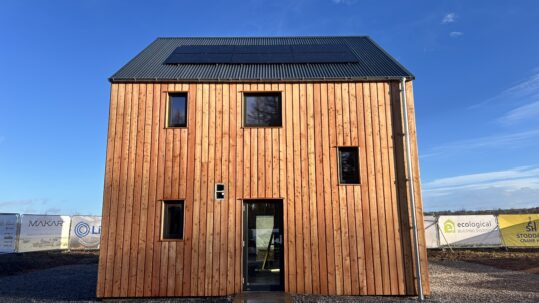
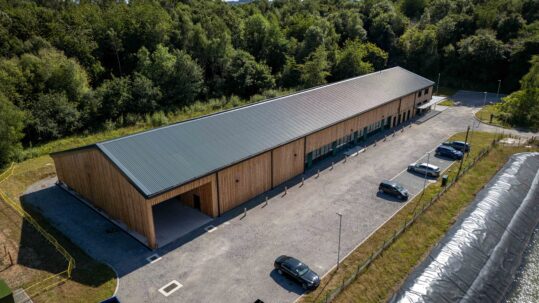
When specified and installed correctly, timber cladding is a safe, sustainable, popular and practical solution for many building types. The Government should recognise this by issuing a statement on buildings below 11 metres in height.
The timber industry recognises that high rise buildings need additional safety measures, and has supported the use of non-combustible cladding in category A or A1 above 18 metres. The extension of a ban on the use of combustible materials on external walls down to 11 metres we can accept, however the Government must look beyond height and issue clarity for the industry as a whole.
The best way that the Government could achieve a safer building system is by introducing mandatory, comprehensive fire-risk assessments during the design process for buildings such as high-rises, community centres and schools.
An independent, professional fire risk assessment that considers building design, use, materials and location is essential at the design stage for multi-occupancy and assembly buildings regardless of height. As the Government recognises, height is only one, limited, factor to be considered.
This principle of risk assessment has been embodied in the Construction Design and Management Regulations for some years and has recently been reinforced by MHCLG in a circular letter to Building Control in England and Wales. This principle needs to be extended and rigorously enforced.
We support stronger enforcement in the form of a new Building Safety Regulator, and the introduction of mandatory sprinklers, two escape stairs, and other fire safety components into high rise buildings, unless shown to be unnecessary by a comprehensive fire risk assessment.
We also advocate for a ‘lock down’ in specification between the design and construction phases to ensure that the use of materials, the scope of work, installation, and other aspects of fire design are not diluted or lost during the project journey.
To make buildings safer, we recommend Government…
Focus the ban on combustible cladding above 11 metres. This will provide the clarity needed for designers and specifiers to build better and safer.
Take a scientific, evidence-based approach. Use BS8414 as the base for fire safety compliance, which was found to still be fit for purpose in the Hackitt Review.
Align the combustibles material ban to the Scottish approach. This will create a common regulatory approach to combustible material throughout the UK improving clarity and safety.