



By choosing to build with timber now, we are helping to build careers, jobs and a skilled workforce for the zero-carbon economy of the future.
Building new homes requires a skilled workforce, and that workforce will need to grow in order to enable the ambitious housing targets to be reached. The 2016 Farmer Review identified that there had long been an “underinvestment in training and development, in innovation, in raising productivity” within the construction industry, and that serious skills shortages must be addressed with urgency to enable Government housebuilding targets to be reached.
Through engagement with high-quality apprenticeships, which are engaging and insightful, the timber industry is working to inspire today’s students and tomorrow’s skilled tradespeople. Over the past year, BWF and the STA have been at the forefront in the creation of new trailblazer apprenticeship standards to provide a consistent pipeline of skilled people, including for carpentry, joinery, and wood product manufacturing, the development of construction assembly, and timber frame erection standards.
The Farmer Review predicted that, due to an ageing workforce, 620,000 people will have retired from the construction industry by 2026. Replacing these workers will require greater efforts by government and industry to both coordinate, consolidate and communicate the opportunities and advantages of working in construction to students, and ensure there is sufficient funding for apprenticeship provision.
Timber and offsite construction
Modern Methods of Construction (MMC) have long featured in the timber industry. Timber frames are built using offsite construction methods, providing up to 30% quicker build times than traditional masonry according to research by the Structural Timber Association (STA).
Recent data from the STA indicates that currently there is a cost saving in projects of two to three per cent when using timber frame. Longer term the wider adoption of MMC, including those which use timber, has the potential to bring about cost savings of 30%. This is due to the speed of construction, quality of build, decreased size of the workforce, and the ability to bulk purchase.
These advantages have been acknowledged by the Royal Institute of Chartered Surveyors who said that timber frames are a “mainstream and intelligent way to build, it presents costeffectiveness, speed and energy-efficiency advantages from inception to construction”.
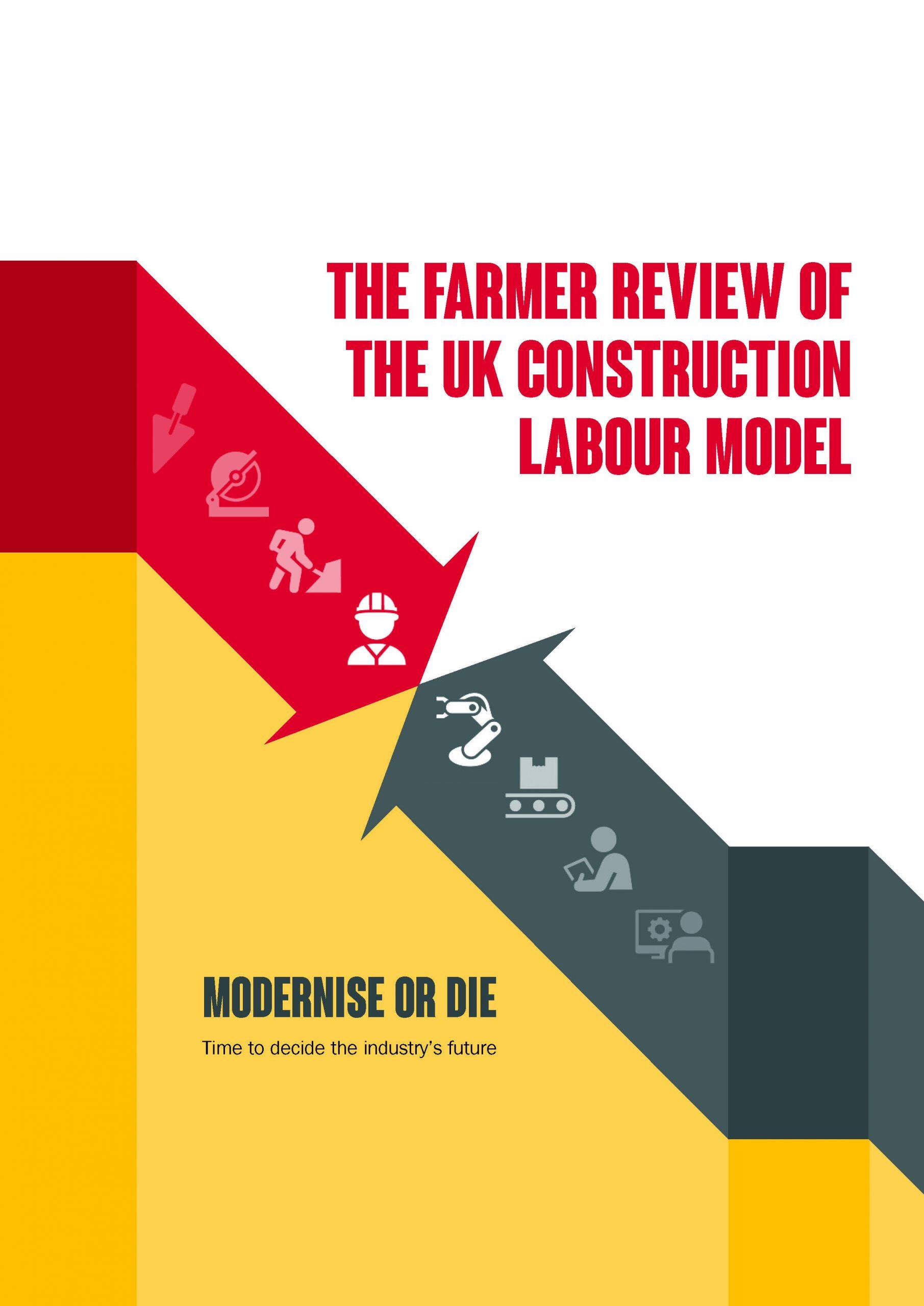
The vision should be of a UK construction sector where traditional skills needs are efficiently met, with looming labour shortages at least partially offset by a greater and more focused investment in the appropriate skills that industry will require in the future. Alongside this, purposeful and strategic industry leadership is needed, driving investment in new technology and manufacturing capability that will grow over time to boost capacity and productivity and reduce the reliance on labour in line with the likely future reducing availability. It is suggested that the residential sector will lend itself more easily to a large scale move to a manufacturing led approach but with the ability to evolve into other sectors subsequently.
Policy Recommendations
Government, educational institutions, and businesses should work with the construction industry to coordinate, consolidate and communicate the opportunities and advantages of working in construction to students.
Local government should incorporate a requirement to employ a minimum number of apprentices and provide a minimum level of training into local planning policy frameworks.
The Education and Skills Agency should ensure school leavers have access to apprenticeship programmes relevant to the construction industry and support local employers in accessing apprentices.